The Wisdom of David Meltzer: Lessons in Business and Life
Eric Harris • July 21, 2024
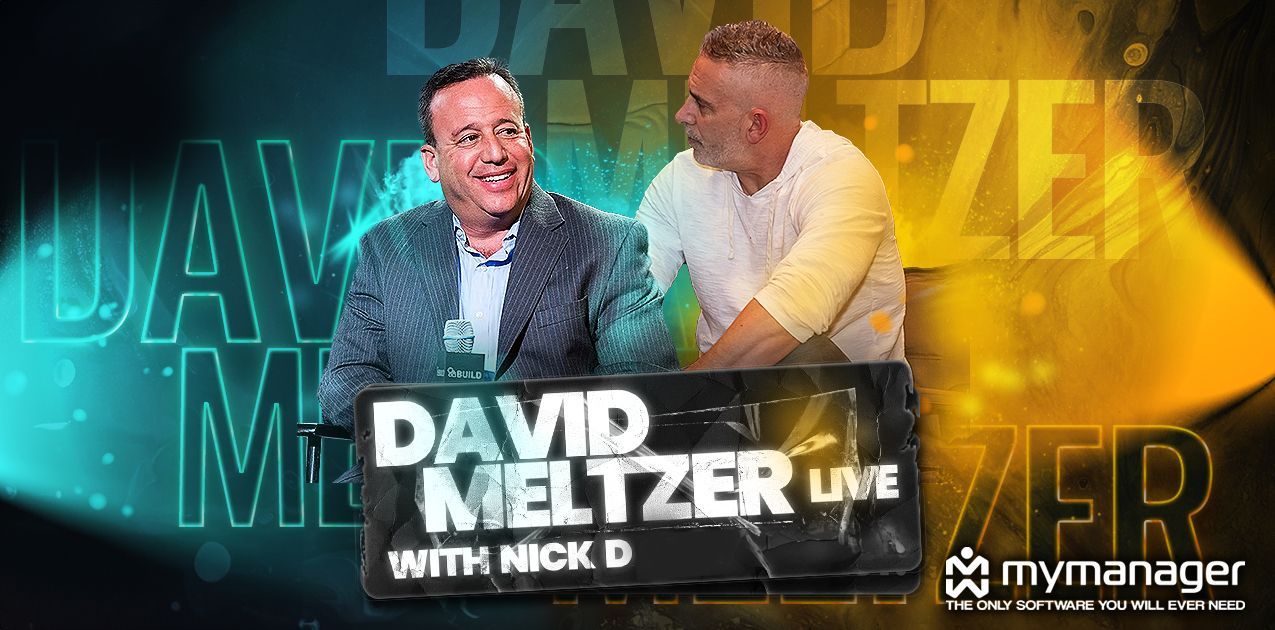
Two men are sitting at a table with a sign that says david meltzer live with nick d

Introduction by Nick D

Hey everyone, it's Nick D here, and today I have the incredible honor of introducing a truly legendary figure in the world of sports, business, and personal development – David Meltzer. For those who may not be familiar, David Meltzer is not just any sports executive; he is the former CEO of Lee Steinberg Sports & Entertainment Agency, which inspired the movie "Jerry Maguire". David has been recognized globally as one of the top entrepreneurs, investors, and business coaches. He’s been honored by Variety magazine as their Sports Humanitarian of the Year and received the Ellis Island Medal of Honor. He’s also the executive producer of shows like "2 Minute Drill" and "Office Hours" on Apple TV, as well as Entrepreneur’s top digital business show, "Elevator Pitch". Beyond these accolades, David’s mission is to empower over a billion people to be happy by providing immense value in all his endeavors. Let’s give a warm, virtual round of applause to David Meltzer!


A Journey of Transformation: From Scarcity to Abundance

Hello everyone, it’s David Meltzer here. I’m excited to share some insights and experiences that have shaped my journey, hoping to inspire and educate you with empathy. My life story is a testament to the power of perspective, resilience, and the pursuit of one’s potential.


The World of Not Enough

I grew up in a world of not enough. Raised by a single mom who worked tirelessly to support her six children, our lives were a constant struggle. Despite our financial hardships, my mom instilled in me the value of hard work and education. She worked two jobs, and even though we sometimes lived on food stamps, she still found a way to buy school supplies for her students. This scarcity mindset influenced my initial belief that money was the key to happiness.


The World of Just Enough

Driven by the desire to escape poverty and buy my mom a house, I pursued a career in law, believing it was the surest path to financial stability. However, a pivotal moment came when I chose a sales job over a traditional legal career, despite my mom’s advice to the contrary. This decision catapulted me into financial success, and by 1995, I was a millionaire. Yet, my life was governed by a mindset of trade and negotiation – everything was about what I could get in return for what I gave.


The Turning Point

In 2008, I lost everything. But before this fall, I had three significant warnings. The first was a gift from my estranged father – a jacket with no pockets – symbolizing that I couldn’t take my wealth with me. The second was from my best friend, who refused to accompany me to the Masters, criticizing my lifestyle. The third and most impactful was from my wife, who threatened to leave me if I didn’t change. These moments forced me to confront the truth about myself: I was the liar, cheater, manipulator, and overseller I despised.


Embracing a World of More Than Enough

I began to rebuild my life with a new perspective. I embraced gratitude, learning to find light and lessons in every situation. Forgiveness became a cornerstone, allowing me to ease the burden of past mistakes. Accountability taught me to take responsibility for everything in my life, and effective communication with something greater than myself – an omniscient, all-powerful source – provided guidance and faith.


Living in a world of more than enough means understanding that giving and receiving are part of a continuous flow. By giving more, I receive more, and by asking for help, I acknowledge the abundance available to all. This mindset has allowed me to rebuild my wealth and live a life full of purpose and fulfillment.


Questions and Answers


1. Who was the best athlete you worked with, in terms of their personal qualities?


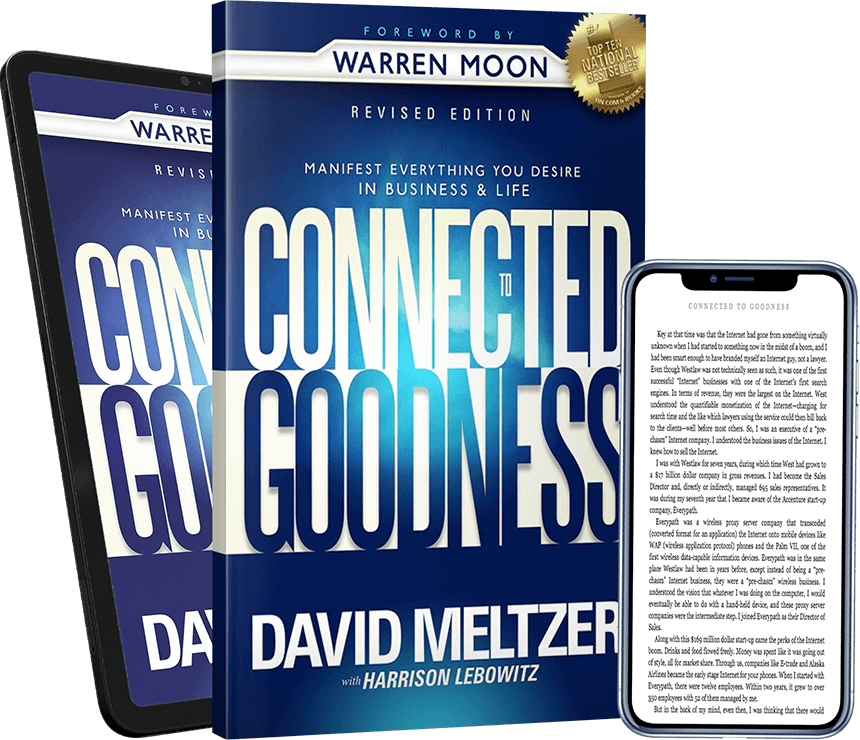
David Meltzer: While I’ve had the privilege of working with many exceptional athletes, Warren Moon stands out. His wisdom and perseverance are unparalleled. However, the common denominator among all successful individuals I’ve encountered – be they athletes, entrepreneurs, or celebrities – is their relentless pursuit of their own potential and their ability to enjoy the consistent, persistent pursuit of that potential.


2. What are the three most important things gym owners and entrepreneurs should focus on, especially given the current challenges?


David Meltzer:


Know What You Want: Every day, be clear about what you want personally, experientially, giving-wise, and receiving-wise, aligned with the reality of today.


Know Your Who: Identify who you can help and who can help you. Seek guidance from those who have already achieved what you aspire to, and offer help to those on their journey.


Know Your How: Be a student of your calendar. Manage your time with intention and attention, focusing on productivity, accessibility, and gratitude. Study your non-negotiable activities, both planned and unplanned, to maximize your effectiveness.


3. How did losing everything change your perspective on life and business?


David Meltzer: Losing everything was a humbling experience that forced me to reassess my values and priorities. It taught me the importance of gratitude, empathy, and accountability. I learned to appreciate the intangible aspects of life, such as relationships and personal growth, over material wealth. This shift in perspective has been instrumental in my journey to rebuild my life and business on a foundation of abundance and purpose.


4. What advice do you have for someone struggling to find their purpose?


David Meltzer: Start by identifying what you are passionate about and what brings you joy. Reflect on your experiences and look for patterns in the activities that make you feel fulfilled. Seek feedback from those who know you well, and be open to exploring new opportunities. Remember, finding your purpose is a journey, not a destination. Stay curious and be patient with yourself.


5. How can entrepreneurs balance work and personal life effectively?


David Meltzer: It’s essential to set clear boundaries and prioritize your time. Schedule dedicated time for work, family, and self-care, and stick to it as much as possible. Communicate your boundaries with your team and loved ones to manage expectations. Also, practice being present in the moment, whether you’re at work or with your family, to ensure you’re giving your full attention to each aspect of your life.


6. What role does empathy play in business success?


David Meltzer: Empathy is crucial in understanding and connecting with your customers, employees, and partners. It helps you to see things from their perspective and address their needs and concerns effectively. Building strong, empathetic relationships fosters trust and loyalty, which are essential for long-term business success. Empathy also promotes a positive and inclusive work culture, leading to higher employee satisfaction and productivity.


7. Can you share a strategy for effective goal setting?


David Meltzer: Set SMART goals – Specific, Measurable, Achievable, Relevant, and Time-bound. Break down your long-term goals into smaller, actionable steps, and track your progress regularly. Ensure your goals align with your values and purpose to stay motivated. Additionally, be flexible and open to adjusting your goals as needed, based on feedback and changing circumstances.


8. How important is continuous learning and development?


David Meltzer: Continuous learning is vital for personal and professional growth. It keeps you adaptable and competitive in an ever-changing world. Make it a habit to seek new knowledge and skills, whether through formal education, self-study, or experiential learning. Stay curious and open-minded, and surround yourself with people who challenge and inspire you to grow.


9. What’s the best way to handle failure and setbacks?


David Meltzer: View failure as an opportunity to learn and grow. Instead of dwelling on mistakes, analyze what went wrong and identify lessons that can help you improve. Cultivate resilience by maintaining a positive mindset and focusing on your long-term vision. Remember, setbacks are a natural part of the journey, and each one brings you closer to your goals if you learn from them.


10. How can business leaders foster innovation within their teams?


David Meltzer: Encourage a culture of curiosity and experimentation. Provide your team with the resources and support they need to explore new ideas and take calculated risks. Foster open communication and collaboration, allowing diverse perspectives to contribute to the innovation process. Recognize and reward creative efforts, and create a safe environment where failure is seen as a stepping stone to success.


I appreciate your attention and engagement. Remember, living with an abundant mindset and practicing gratitude, empathy, accountability, and effective communication can transform your life and business. Thank you, and I look forward to connecting with you all again soon!

Join The Brotherhood
By Nick Dougherty December 29, 2025
The Inversion Framework That Will Dominate 2026 Marketing didn’t stop working. Humans adapted. That distinction matters more than any algorithm update, ad strategy, or funnel hack being sold right now. Most people believe marketing broke because platforms changed, attention spans dropped, or competition increased. Those are surface-level explanations. Convenient ones. They let marketers keep doing the same things while blaming external forces. The truth is more uncomfortable. Marketing broke because human decision-making evolved faster than marketing tactics did. The Real Collapse Was Psychological, Not Technical The modern consumer is not distracted, lazy, or cheap. They are pattern-aware. They have seen: the funnel the free offer the urgency the testimonials the countdown timer the “last chance” messaging And once the brain recognizes a pattern, persuasion loses its power. This isn’t a theory. It’s behavioral psychology. When the mind anticipates the move, it no longer reacts emotionally. It evaluates. And evaluation kills impulse-driven marketing. That’s what collapsed. Why Persuasion Stopped Working at Scale For decades, marketing leaned on principles popularized by thinkers like Robert Cialdini — reciprocity, social proof, scarcity, authority. Those principles are still valid. But only when trust exists first. What broke was not the principles. What broke was the mass exploitation of them. When: everything is urgent everyone is an authority everything is free everyone has testimonials The brain stops responding. Reciprocity requires perceived effort. Scarcity requires believability. Authority requires credibility. Modern marketing scaled these principles without integrity, stripping them of meaning. The result? Skepticism became the default emotional state. The Data Everyone Feels But Rarely Confronts Across industries — especially local services, fitness, and martial arts — the data tells a consistent story: Facebook and Instagram CPMs have increased 300–800% over the last several years Organic reach has declined, while watch time, saves, and retention matter more than ever Email deliverability has dropped 40–60% for cold or “free” opt-ins Funnel conversion rates continue to decline despite “better creatives” and “smarter targeting” Marketing didn’t become harder. Trust became more selective. Attention didn’t disappear. It learned how to filter. The Russell Brunson Problem (And Why Funnels Aren’t Dead) Funnels didn’t fail. They were put in the wrong order. Russell Brunson taught the world how to systemize conversion. Funnels still work — when used correctly. But funnels were designed for a world where: belief existed before exposure attention was cheaper skepticism was lower That world is gone. The Old Order: Traffic → Funnel → Trust → Conversion The New Order: Belief → Familiarity → Trust → Decision → Conversion Funnels still convert — after belief is established. Without belief, funnels don’t feel helpful. They feel manipulative. Where the Inversion Framework Was Born At Winterborne, we stopped asking: “How do we get more leads?” And started asking: “Why are people resisting before we even speak?” That question changes everything. Because resistance doesn’t come from lack of information. It comes from pattern recognition. The Inversion Framework (Winterborne Doctrine) Inversion marketing begins with a simple rule: Identify what everyone is doing — then reverse it with clarity. Everyone was: pushing offers stacking bonuses increasing urgency lowering commitment optimizing persuasion So we inverted. Inversion Rule #1: Invert the Offer Instead of leading with “Here’s what you get,” we start with “Here’s who this is for — and who it’s not.” This removes anxiety and activates self-selection. Inversion Rule #2: Invert the Message Instead of amplifying pain, we lead with alignment and truth. People don’t want to be reminded they’re broken. They want to feel understood. Inversion Rule #3: Invert the CTA Instead of “Buy Now,” we use decision-based calls to action. “Are we the right fit?” This preserves autonomy — and autonomy is the foundation of trust. Inversion Rule #4: Invert Proof Instead of hype-driven testimonials, we show process proof: how progress is measured why people stay what people notice first This feels real because it is real. Why Decision Pages Convert Better Than Sales Pages Sales pages assume: emotional fragility low awareness urgency as motivation Decision pages assume: intelligence discernment autonomy Sales pages push. Decision pages invite. And invitation is the only thing that works in a high-skepticism environment. This is why Winterborne no longer builds sales pages. We build Decision Architecture. The Psychology Behind the Shift When someone lands on a Decision Page, four things happen neurologically: Autonomy is preserved The brain stays open instead of defensive. Cognitive load drops No pressure, no countdowns, no urgency. Identity matching begins “Is this for someone like me?” Commitment quality increases Fewer leads — better decisions. This leads to: higher show-up rates stronger retention fewer refunds compounding trust Why Winterborne Exists Winterborne wasn’t built to optimize marketing tactics. It was built because the industry refused to accept reality. Marketing did not need: louder messaging smarter ads more automation It needed psychological alignment. Winterborne exists to help brands stop: chasing attention manipulating emotion begging for action And start building systems people choose to enter. The Truth Most Will Ignore This framework isn’t comfortable. Because it: filters people out slows vanity metrics requires conviction Most businesses will keep discounting, stacking offers, and chasing leads — wondering why nothing sticks. The future belongs to brands that are clear, calm, and selective. Final Thought The old marketing playbook didn’t fail because it was wrong. It failed because humans evolved. The brands that win in 2026 won’t persuade better. They’ll align better. If this resonated, follow Nick Dougherty on Instagram. Everything published there is the real-time application of this framework. Winterborne isn’t a tactic. It’s a response. And this is only the beginning.
By Nick Dougherty July 23, 2025
It’s that time of year again—back-to-school season is here, and it’s one of the biggest opportunities of the year to grow your school. But before we talk about flyers, graphics, or ads, let’s get real about one thing: Are you giving value —or just noise? “The whole key to your marketing is you have to provide value for people and expect nothing in return. ” That one line is everything. In this webinar, I walked our community through a complete back-to-school marketing campaign—graphics, emails, social posts, and strategy. Over 20 hours of work went into it, and we’re giving it away completely free. Why? Because that’s what real value looks like. Everyone Talks About Value… But What Are You Really Giving? Too many businesses are showing up online with the wrong energy. No value. No heart. Just random posts—and then wondering why nobody is engaging or buying. Here’s the truth: If your content isn’t connecting… If it’s not starting conversations… If it’s not making someone stop their scroll… Then it’s not working. Stop Waiting. Start Giving. Don’t wait for a perfect funnel or fancy design. Start by asking: What is anyone getting from you today? How are you helping people—right now? What makes you unforgettable in a crowded feed? That’s the foundation of this back-to-school campaign. Not ads. Not gimmicks. Just real help, delivered consistently. Marketing Is Magic… or It’s Invisible Your marketing either stops someone in their tracks—or it gets scrolled past and forgotten. And that’s the line in the sand today. This campaign isn’t about spending more money. It’s about making your message magnetic. Because when you show up with clarity, energy, and a genuine offer to help…  That’s when the magic happens.
By Nick Dougherty April 21, 2025
Let me tell you a truth bomb that might just change your entire business trajectory: “The wake-up slap algorithm is not your enemy. Your silence is.” That one line says it all. In an era where attention is currency, the speaker behind this game-changing insight—a marketing and media strategist who’s partnered with some of the most influential entrepreneurs in the world—reveals exactly what it takes to stand out, grow fast, and stay relevant. This isn’t theory. It’s war-tested strategy. The Game Has Changed. Here's How to Win It. 1. You’re not just a brand. You’re a media company . Let that sink in. Your job isn’t to run ads and hope for a few likes. Your job is to show up every damn day with content that: Builds trust Builds identity Builds community The speaker’s been through the grind. He didn’t “go viral”—he built value . He didn't chase trends—he created a movement by leveraging three weapons: Consistent content creation Strategic partnerships Relentless differentiation “You don’t want to look, sound, or feel like anyone else. That’s the brand.” Be Different, Or Be Forgotten The worst thing you can be in business today is forgettable. “If your heart were set on building a real vibe , you’d be sickened by looking like everyone else.” Too many entrepreneurs copy. They blend. They water down their message. And they wonder why they get ignored. This speaker flipped that script. He built something bold. Raw. Personal. Because that’s what connects. And connection = currency. Collaborate with Killers Want to shortcut success? “Collaborate with killers. I don’t know if anyone’s doing it at the level I am.” This isn’t just about who you know—it’s about who you create with . Strategic partnerships amplify your message, fast-track your reach, and embed your brand in new audiences. He’s done it with names like Tony Robbins, Dean Graziosi, George Bryant, and Randy Garn. Why? Because alignment matters more than algorithms. Content Is the Frontline of Your Brand “You are your own media company and it’s just the scale or the level of where it is right now.” So, what’s the level you’re playing at? This isn’t optional. This is your new job description: Wake up Document Publish Repeat And don’t rely on organic growth alone. That’s amateur hour. You have to invest in attention, in strategy, in systems that scale. Stuck in the Same Place? That’s a Choice. Here’s the slap: “If you're stuck in the same environment, you need to invest your time and energy and fly out and hang out with me for a day. If you're not willing to get out of that environment, you're going to stay in it.” Translation: if you want to grow, get uncomfortable. Get in the room. Get around people who stretch you. Final Takeaways (The "Kicker Quotes" You Need to Tattoo on Your Brain) “It's like we all know that. But they don’t have a solution. I do.” “The wake-up slap algorithm is not your enemy. Your silence is.” “Collaborate with killers. It’s not cocky—it’s the truth.” What to Ask Yourself Next: Are you creating consistent, high-impact content—or just blending in? Who are you collaborating with that elevates your brand? What do people feel when they interact with your business? What environment are you stuck in—and are you brave enough to leave it?
More Posts